Travelling with a dog is one of those things that sounds more complicated than it actually is, right up until you're standing in a car park realising you've forgotten water bowls and it's thirty degrees outside. A proper checklist solves that problem before it starts, so here's what actually earns a place in the car.
Food and water come first, obviously, but don't forget the bowls themselves. A collapsible travel bowl takes up almost no space and means you're never relying on finding something suitable at a service station. Pack a few days more food than you think you'll need too, since travel days tend to mean irregular meal times and the odd extra treat.
A lead and a spare collar are worth throwing in even if your dog never leaves either at home. Clips break, leads get left in the wrong bag, and having a backup means one small mishap doesn't turn into a stressful search in an unfamiliar place. Make sure the collar has an up to date tag with a current phone number, particularly if you're somewhere your dog doesn't know.
Shop the travel water bowl and matching lead and collar set
Bring their bed, or at least a blanket that smells like home. New environments are disorientating enough for a dog without also losing every familiar scent, and a bed from home in an unfamiliar room does a lot of quiet work in helping them settle faster.
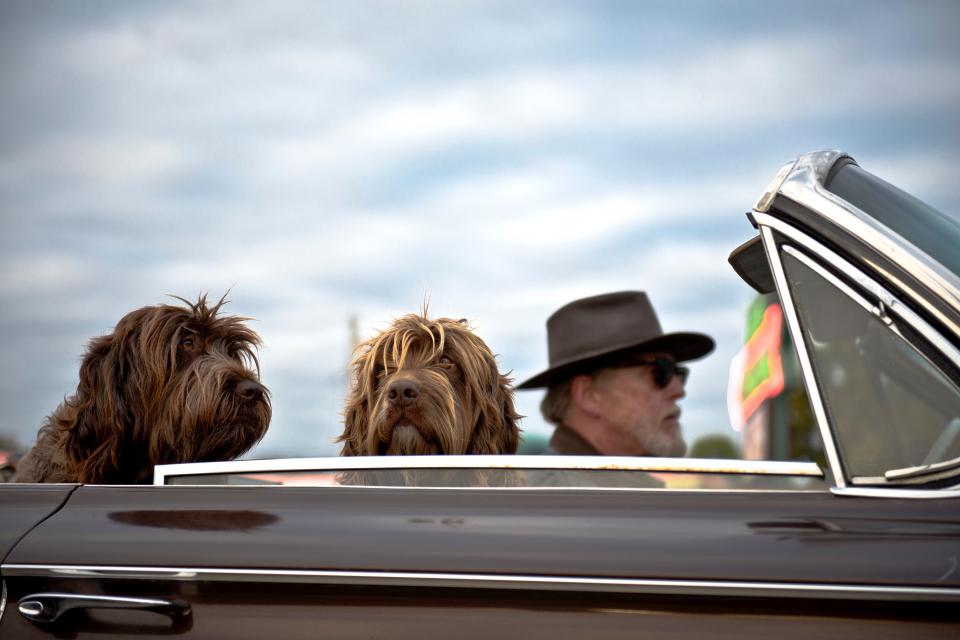
A towel, or two, always earns its place. Wet dog, muddy paws, unexpected swims in rivers that weren't part of the plan, these things happen more often when you're away from your usual routine. Keep a towel within easy reach rather than buried at the bottom of a bag.
Think about the journey itself, not just the destination. If your dog isn't used to long car journeys, a few short practice trips beforehand, building up gradually, makes a real difference to how settled they are on the actual travel day, rather than being thrown straight into a five hour drive.
Finally, keep some form of ID beyond the collar tag if you're travelling somewhere entirely new. A note with the address you're staying at, alongside your usual contact details, means that even if a collar comes off unexpectedly, whoever finds your dog has a way to reach you quickly.
Don't overlook the return journey either. Dogs can arrive home from a trip overstimulated or, alternately, exhausted in a way that takes a day or two to settle from. Building in a quiet, unhurried day once you're back tends to smooth that transition considerably better than diving straight back into a normal routine.
Finally, think about the car itself. A boot liner or seat cover saves a lot of cleaning later, and a window shade helps keep the car cool if you're stopping anywhere the dog will be waiting even briefly. None of this is complicated, it just needs doing once, properly, so you're not improvising at a motorway services with a dog who badly needs a wee and a bowl of water.