Cats tend to get fewer accessory choices than dogs, mostly a collar and perhaps a bed, but the same logic around coat colour and tone still applies, and it's worth getting right given how few pieces a cat typically wears or uses.
For ginger or orange cats, deep greens and rich blues work particularly well, creating the same warm against cool contrast that flatters red toned dog breeds. These colours make a ginger coat look considerably richer than it does against beige or pale neutral tones, which can occasionally wash the colour out.
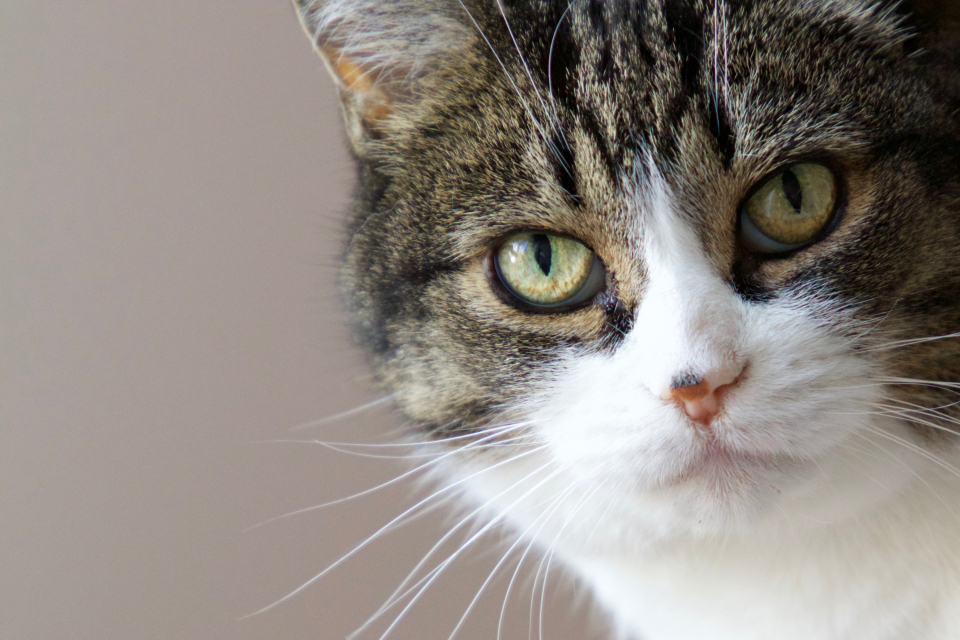
For tabby cats, whose coats already contain a mix of tones, it's often better to pick one dominant colour from their coat pattern and echo it in a collar, rather than introducing an entirely new colour that competes with the existing pattern. A warm brown or rust collar tends to work beautifully against most classic tabby colourings.
For black cats, similar rules to black dogs apply, almost everything works, but rich jewel tones and deep saturated colours show up more distinctly than pale or muted ones. A collar in a rich forest green or deep rust creates a lovely contrast without looking like an attempt to compete with the coat itself.
For white or very pale cats, softer neutrals work well, but don't be afraid of a bolder colour either. Pale cats can carry a rich, saturated collar surprisingly well, since there's very little competing colour from the coat itself to clash against.
Shop collars and accessories suited to every coat colour
Multi coloured or calico cats present a slightly trickier challenge, since there's rarely one single dominant tone to work from. In these cases, a neutral colour, a warm oatmeal or a soft grey, tends to sit comfortably against almost any coat pattern without competing for attention against fur that's already doing plenty of visual work on its own.
Don't discount trying something a shade bolder than your instinct suggests either. Cats carry colour surprisingly well against fur, more so than most owners expect, and a slightly braver choice than you'd normally go for often ends up being the one that gets the most compliments.
Don't forget bedding and blankets follow slightly different rules to collars, since a cat spends far more time near their bed than actively wearing anything. A bolder colour on a bed, somewhere they'll be seen resting rather than moving quickly past, tends to have more visual impact than the same bold colour on a small collar.
Beds and blankets follow the same logic as collars, though with slightly more flexibility since a cat spends more time near their bed than actually wearing it. If in doubt, warmer coats generally suit cooler accessory tones, and cooler or darker coats generally suit warmer ones. It's a small detail, but it's the kind of small detail that makes a considered home feel considered.
When unsure, warmer neutrals are a safe, flattering default.
It is a small decision, but one worth making thoughtfully.
Trust your own eye here more than any general rule.
Give yourself permission to simply try it and see.